About
About EmpowerEd’s Mission
EmpowerEd’s mission is to partner with teachers, principals, districts, students, and parents to reimagine what learning can be through three core pillars: brain-based classroom strategies, high-impact instructional coaching, and powerful student engagement. We provide practical, research-informed tools and supports that translate the science of learning into everyday practice, empower educators at every level to refine their craft, and create inclusive, equitable environments where every learner is challenged, supported, and inspired to thrive.
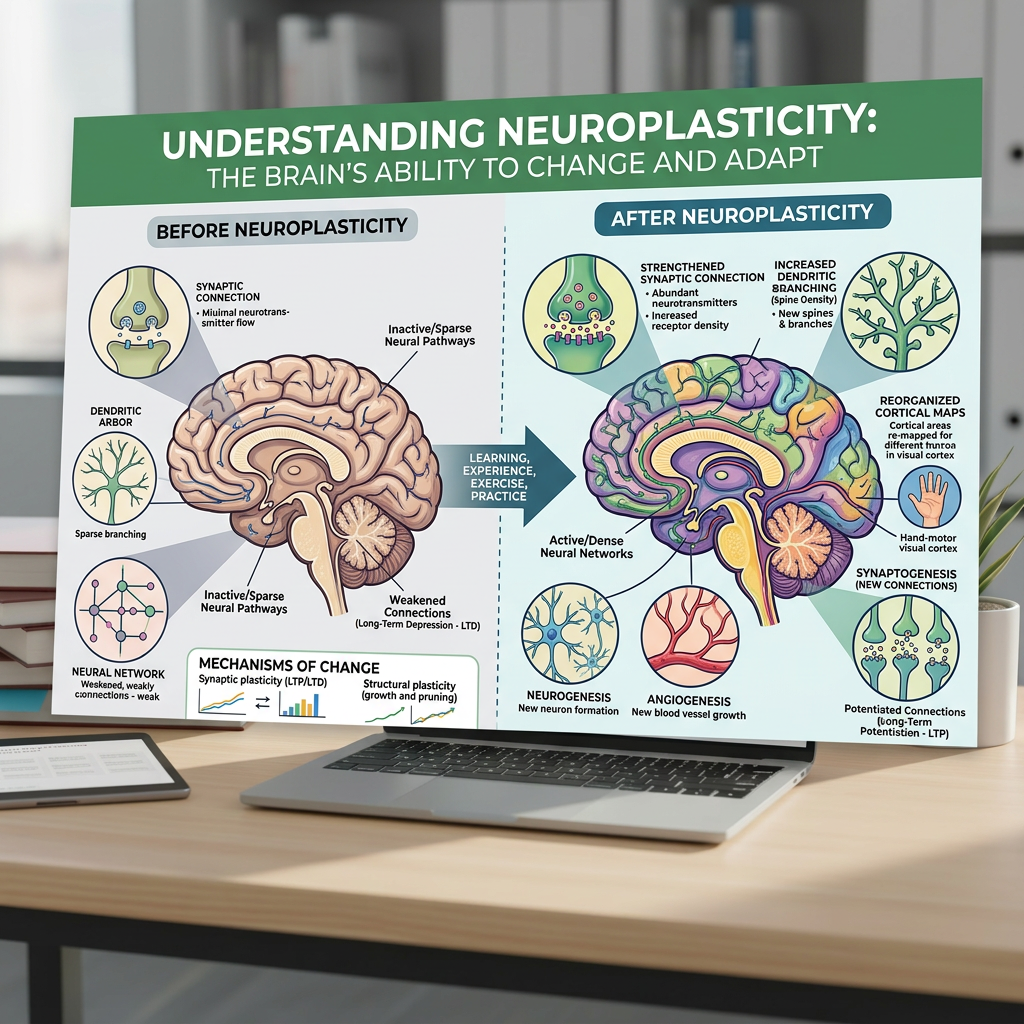
Neuroplasticity
What Is Neuroplasticity?
Explain that the brain changes and grows through practice and experience.
Add a graphic showing neural pathways strengthening over time.
Classroom Example
Teaching students that intelligence can grow encourages perseverance and a growth mindset.
Example:
Students who struggle with writing can improve through consistent practice, feedback, and revision.
Insights
Why Brain Research Matters
Teacher leaders can:
- Promote evidence-based instructional practices.
- Support professional learning communities.
- Advocate for student-centered instruction.
- Encourage social-emotional learning.
Reflection
Understanding how the brain learns helps educators create environments where all students can succeed academically and emotionally.
Brain Anatomy and Learning
Key Brain Structures
Memory and Learning
Types of Memory
- Sensory Memory
- Working Memory
- Long-Term Memory
Strategies That Support Memory
- Repetition
- Retrieval practice
- Graphic organizers
- Discussion
Example
Students use evidence charts throughout a novel study to strengthen retention of themes and character development.
Cerebrum
- Responsible for thinking, learning, memory, and problem-solving.
Hippocampus
- Processes and stores new memories.
Amygdala
- Processes emotions and affects learning.
Prefrontal Cortex
- Supports decision-making, planning, and self-regulation.
Classroom Application
When students experience stress, the amygdala may interfere with learning. Creating a safe and supportive classroom environment helps students focus and process information more effectively.
Featured Insight
Neuroscience – How the Brain Learns: Applying Neuroscience to Improve Student Achievement
Explore classroom-ready strategies grounded in how the brain encodes, stores, and retrieves information so you can design lessons that boost focus, retention, and long-term achievement.
Key Brain-Based Learning Principles
- The brain learns through patterns—group concepts into clear chunks and use visuals or organizers to make connections visible.
- Emotion drives attention—start lessons with a story, question, or real-world problem that sparks curiosity.
- Retrieval strengthens memory—build in quick no-stakes check-ins where students recall key ideas from previous lessons.
- Spacing and repetition matter—revisit big concepts over days and weeks instead of teaching them once and moving on.
- Multi-sensory input supports understanding—mix short bursts of talking with movement, visuals, and hands-on practice.
-
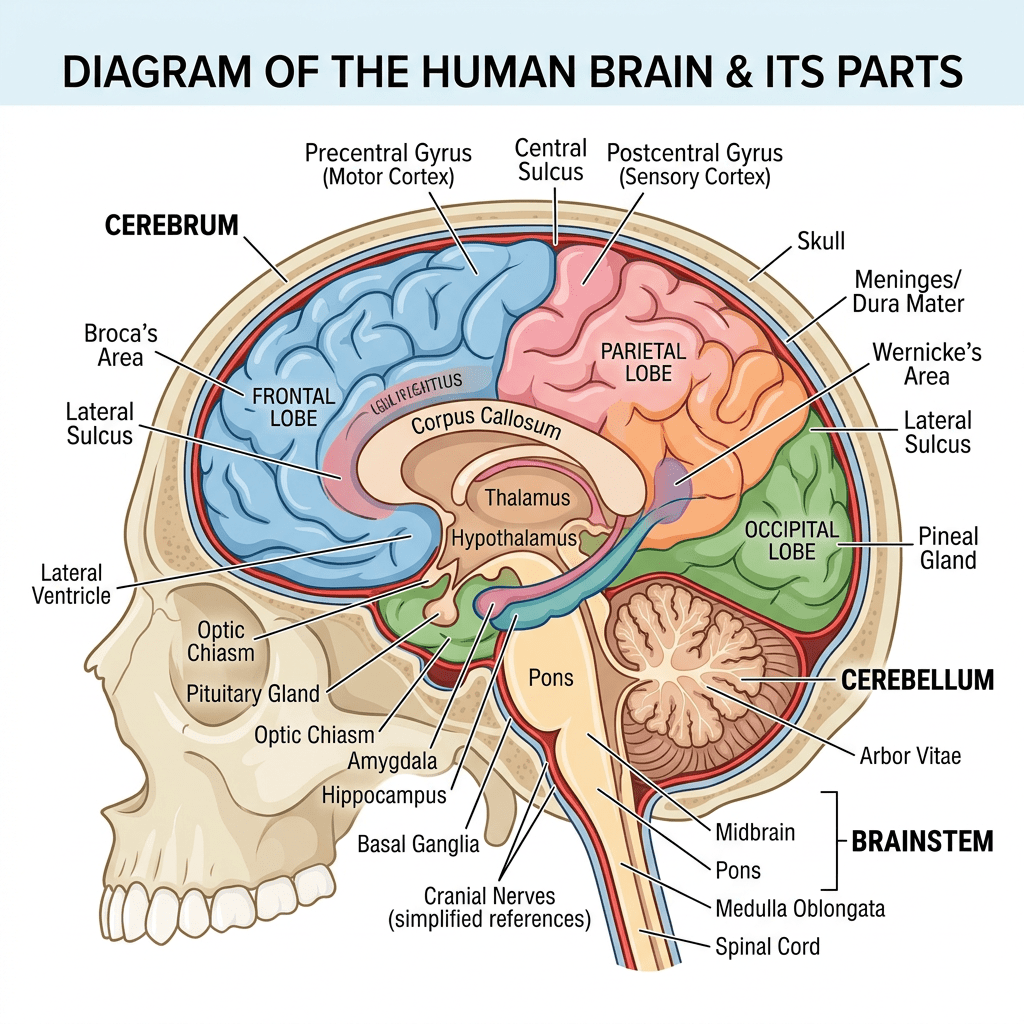
Detailed anatomical illustration of the human brain and its key parts Brain Research Finding
Attention & Engagement
Students learn best when they are actively engaged.
Classroom Strategies
- Think-Pair-Share
- Interactive notebooks
- Cooperative learning
- Technology integration
Example
Students participate in a debate about scientific ethics after reading Flowers for Algernon.
Brain Anatomy and Function
Label Diagram
Include:
| Brain Structure | Function | Classroom Implications |
|---|---|---|
| Prefrontal Cortex | Decision-making | Supports planning and self-regulation |
| Hippocampus | Memory formation | Important for retention |
| Amygdala | Emotional processing | Stress impacts learning |
| Cerebrum | Thinking and reasoning | Supports academic tasks |
Critical Reflection
Explain why emotional regulation and memory formation are interconnected.
This helps demonstrate synthesis.
Example
As an educator, studying neuroscience has reinforced the importance of creating emotionally supportive learning environments. Understanding how emotions, memory, and neuroplasticity interact has influenced my approach to instruction by encouraging the use of collaborative learning, growth mindset practices, and meaningful student engagement opportunities.
Upcoming Events Still In Progress
2025-09-18
Innovation Lab
Cincinnati, OH
Register
2025-09-23
Teaching Center
Milwaukee, WI
View agenda
2025-09-28
Learning Hub
Pittsburgh, PA
Register
2025-09-20
Innovation Lab
Toronto, ON
Register
2025-09-24
Teaching Center
Tinley Park, IL
Join live
2025-09-30
Learning Hub
Hartford, CT
Event details
2025-09-21
Innovation Lab
Virtual
Register
2025-09-27
Teaching Center
Hershey, PA
Register
2025-10-01
Learning Hub
Bangor, ME
Join live
Testimonials
Hope D.
EmpowerEd’s resources helped our district align instruction with inclusive practices while keeping lessons practical, engaging, and realistic for busy teachers.
Hope D.
The blended learning webinar gave me concrete strategies I could implement the very next day, especially around student voice and choice online.
Hope D.
After coaching with EmpowerEd, our school’s PLCs finally felt purposeful, focused on evidence of learning instead of just compliance and schedules.
Hope D.
As a new teacher, I rely on EmpowerEd’s templates and checklists to plan lessons faster and differentiate without feeling completely overwhelmed.
Newsletter
Get monthly strategies, tools, and classroom stories.


